On this page
- A portfolio proves you can do the job, even without experience
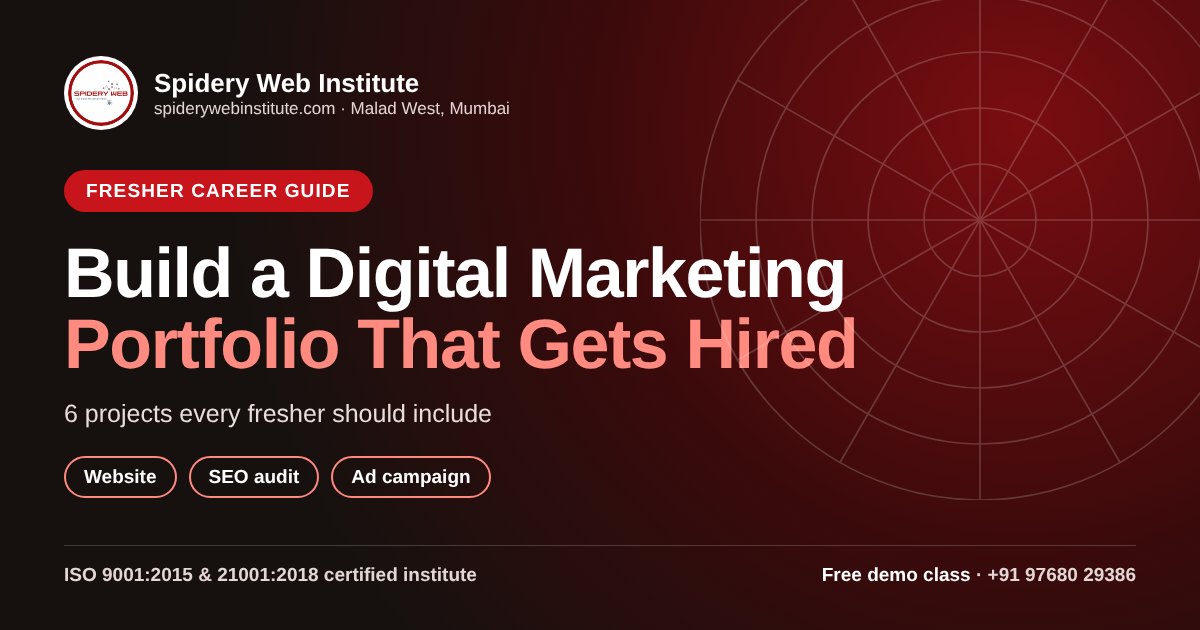
- Include 4 to 6 projects: website, SEO audit, ad campaign, content plan, content samples, analytics report
- Host it on your own website and link it everywhere
- Present every project as goal, what I did, result, what I learnt
- Avoid certificates-only portfolios and broken or private links
Quick answer: A fresher's digital marketing portfolio should show 4–6 real pieces of work: a website you built, an SEO audit, a Google or Meta ad campaign with results, a social media content plan and an analytics report. Host it on a simple website or Google Drive and link it on your resume and LinkedIn.
When a recruiter has 200 applications for one digital marketing executive role, the candidates who get called are rarely the ones with the best marks. They are the ones who can show work. A portfolio is your proof that you can do the job — even if you have never had one.
This guide explains what a digital marketing portfolio is, the six projects every fresher should include, where to host it and how to present results so recruiters take you seriously.
What a digital marketing portfolio is
A digital marketing portfolio is a short, organised collection of real work you have done — websites, audits, campaigns, content and reports — each explained with the goal, what you did and the result. Think of it as a visual resume. A good fresher portfolio has 4–6 pieces, not 20.
Recruiters at agencies and brands use it to answer three questions quickly:
- Can this person use the tools we use?
- Do they think about results, not just tasks?
- Can they explain their work clearly to a client?
6 projects every fresher should include
1. A website you built
Build a simple WordPress site — for yourself, a family business or a local shop. Show the live link, the pages you created and one or two things you did for SEO (titles, meta descriptions, speed). This proves you understand how businesses actually get leads online.
2. An SEO audit
Pick a real local business website and audit it: keyword opportunities, title and meta issues, page speed, mobile problems, missing Google Business Profile details. End with five prioritised recommendations. Recruiters love audits because they show analytical thinking.
3. A Google Ads or Meta Ads campaign
Even a small ₹500–₹2,000 campaign with real data is valuable. Show the objective, audience, ad copy or creative, budget, and results: impressions, clicks, CTR, cost per click and leads. If results were weak, say what you would change — that is just as impressive.
4. A social media content plan
Create a one-month content calendar for a brand with content pillars, post ideas, captions and 3–4 designed posts or Reels. Add a short note on the audience and why you chose these formats.
5. Content samples
Two blog posts optimised for a keyword, a few ad headlines and an email or WhatsApp message sequence. Include the focus keyword and why the structure helps SEO or AI search.
6. An analytics report
Use Google Analytics 4 or Search Console data (from your own site or a practice account) and turn it into a one-page report: what happened, why, and what to do next. This is the skill most freshers are missing.
| Project | Shows recruiters | Time to build |
|---|---|---|
| Website | WordPress, on-page SEO | 3–5 days |
| SEO audit | Analysis, prioritisation | 1–2 days |
| Ad campaign | Ads Manager, metrics | 1 week incl. running |
| Content plan | Strategy, creativity | 2 days |
| Content samples | Writing, keyword use | 2 days |
| Analytics report | Data, communication | 1 day |
Where to host your portfolio
- Your own website — the best option, because it is itself a portfolio piece. A simple WordPress page with one section per project works well.
- Google Drive or Notion — fine as a start; make sure links are set to “anyone with the link can view”.
- Canva or a PDF — good for interviews; keep it under 10 pages.
- LinkedIn Featured section — add your best two projects so recruiters see them on your profile.
Put the link at the top of your resume, in your LinkedIn headline area and in every application email.
How to present results (even small ones)
Use the same four-line structure for every project:
- Goal: “Get enquiries for a home bakery in Malad.”
- What I did: “Set up a Google Business Profile, ran a ₹1,500 Meta lead ad to women 25–45 within 5 km.”
- Result: “38 leads at ₹39 per lead; 9 orders in two weeks.”
- What I learnt: “Video creatives got 2× the CTR of static images.”
Small numbers are fine. Recruiters know you are a fresher; they want to see that you measure and learn.
Portfolio mistakes recruiters reject
- Only certificates and no actual work
- Screenshots with no explanation of the goal or result
- Copying templates or other people’s work
- Broken links or private Google Drive files
- Too many projects and none explained properly
Frequently asked questions
Can I build a portfolio without a job? Yes. Use course projects, a family business, a friend’s brand, a local shop or your own Instagram page.
How long does it take? Two to four weeks if you work on it alongside a course.
Learn this hands-on
At Spidery Web Institute, every student finishes the 5-month course with a ready portfolio — a WordPress website, SEO project, live Google and Meta Ads campaigns and an automation project — built in our Malad West classroom inside a working agency. See how freshers get hired or book a free demo class.
Frequently asked questions
What should a digital marketing portfolio include?
Can I build a portfolio without a job?
What should a fresher's digital marketing portfolio include?
How many projects should I include?
Do small results count?
 Written by Faiza KhanPublished 5 November 2026 · Updated 12 November 2026 · ⏱ 4 min read